Question Icons: A Strategic Tool for Enhancing Visual Communication
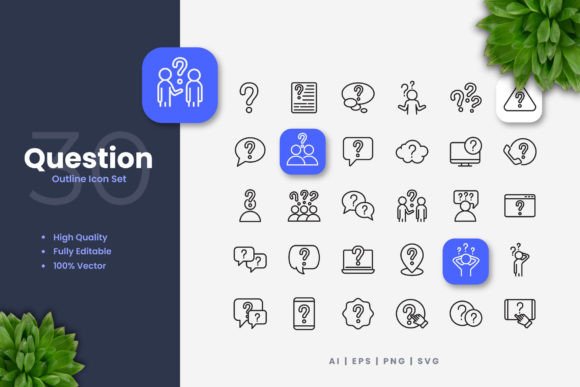
Question Icons are a versatile and visually appealing set of icons designed to enhance the clarity and engagement of your content. Whether you're creating websites, mobile apps, books, social media posts, infographics, flyers, or any other form of visual communication, these icons can play a crucial role in making your message more impactful and user-friendly.
Why Use Question Icons?
In today's fast-paced digital landscape, effective communication is key. Question Icons offer a simple yet powerful way to draw attention, prompt curiosity, and guide users through your content. By using these icons strategically, you can:
- Highlight important questions and prompts within your text.
- Encourage interaction and engagement from your audience.
- Make your content more accessible and easier to navigate.
Strategic Use Cases for Question Icons
Thoughtful integration of Question Icons can support various goals and objectives. Here are some practical examples:
Enhancing Educational Content
Educators and content creators can use Question Icons to break up long texts, encourage reflection, and create interactive learning experiences. For instance, placing an icon next to a key question can prompt students to pause and think, enhancing their comprehension and retention.
Improving User Experience on Websites and Apps
Web developers and app designers can leverage Question Icons to make navigation more intuitive and engaging. By using icons to indicate help sections, FAQs, or interactive elements, you can guide users seamlessly through the interface, reducing frustration and improving overall satisfaction.
Strengthening Branding and Marketing Efforts
Marketers can use Question Icons to create visually appealing and memorable campaigns. These icons can be used in social media posts, email newsletters, and promotional materials to ask thought-provoking questions, gather feedback, and build a stronger connection with your audience.
Practical Tips for Using Question Icons Effectively
To get the most out of Question Icons, it's essential to approach their use with a clear strategy and purpose. Here are some tips to consider:
- Define Your Goals: Before incorporating Question Icons into your content, clearly define what you want to achieve. Are you aiming to increase engagement, improve understanding, or drive specific actions? Having a clear goal will guide your design and placement decisions.
- Consider Context and Audience: Understand the context in which your content will be viewed and the preferences of your target audience. Tailor the style and placement of the icons to align with the overall tone and design of your project.
- Test and Iterate: Experiment with different placements and styles of Question Icons. Gather feedback from users and make adjustments as needed. This iterative process will help you refine your approach and maximize the impact of the icons.
Potential Risks and Considerations
While Question Icons can be highly beneficial, there are potential risks if they are used without careful consideration. Overusing or misplacing these icons can lead to clutter, confusion, and a less professional appearance. To avoid these pitfalls, always:
- Maintain a clean and uncluttered design.
- Use the icons sparingly and purposefully.
- Ensure that the icons complement rather than overwhelm the content.
Technical Specifications and Customization
Question Icons are provided in high-quality, vector formats, making them easy to resize, recolor, and customize. The files included are:
- Source File (Ai): Adobe Illustrator file for advanced editing.
- EPS Version 10: Compatible with a wide range of vector software.
- SVG File: Scalable Vector Graphics for web and mobile use.
- PNG Transparency: Transparent PNGs for quick and easy integration.
- Readme.txt: Detailed instructions and guidelines for use.
Note that the preview mockup is not included in the package.
Conclusion
By integrating Question Icons into your projects, you can enhance the clarity, engagement, and overall effectiveness of your visual communication. With thoughtful planning and strategic use, these icons can become a valuable tool in achieving your goals and delivering better results. Remember to always consider the context, test your designs, and iterate based on feedback to ensure the best possible outcome.